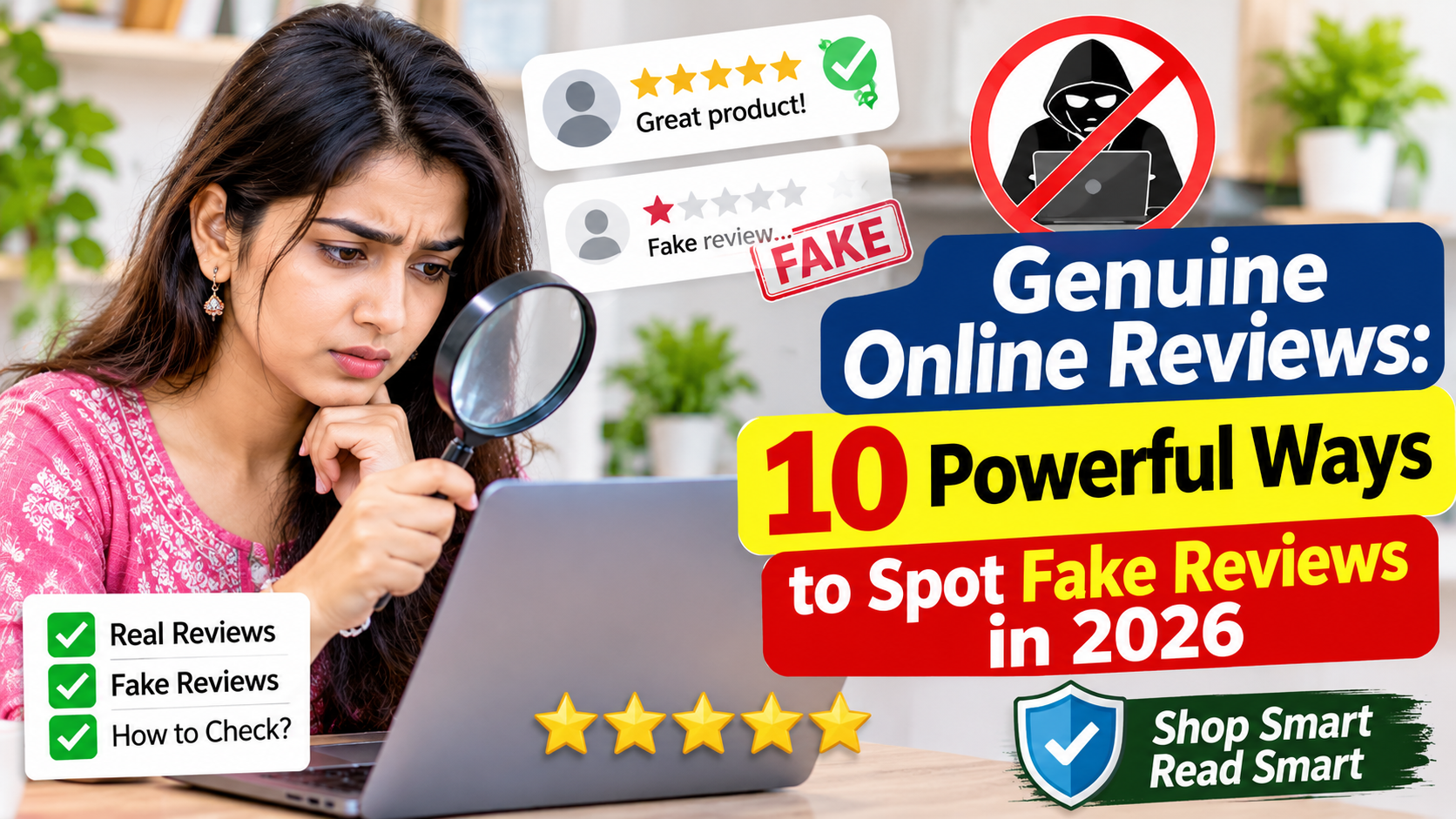
Genuine Online Reviews: 10 Powerful Ways to Spot Fake Reviews in 2026
experiences before making decisions online. However, fake
testimonials, misleading ratings and manipulated feedback can
make it difficult to judge a website or business. Learn how to
recognize authentic feedback, identify suspicious review patterns
and evaluate online information more carefully.
Introduction to Genuine Online Reviews
Genuine Online Reviews provide useful information
about real customer experiences with products, websites and
businesses. They can help people understand service quality,
communication, reliability and possible problems before making
an informed decision.
Online reviews have become an important part of digital
decision-making. People often read ratings and testimonials
before purchasing a product, visiting a website or choosing
a service.
However, not every review published online represents an
authentic customer experience. Some platforms may display
fabricated testimonials, copied comments, paid endorsements
or misleading ratings.
Understanding how reviews work can help users avoid being
influenced by deceptive information. This guide explains
practical methods for checking review credibility and
developing better online research habits.
suspicious online review patterns.
1. What Are Genuine Online Reviews?
Genuine Online Reviews are feedback shared by people describing
their actual experiences with a product, business or service.
These reviews may include positive comments, negative feedback
or balanced observations.
Authentic feedback does not have to be completely positive.
Real experiences can differ depending on customer expectations,
individual circumstances and the quality of the experience.
Common Characteristics of Authentic Reviews
- They describe specific experiences rather than only making broad claims.
- They may include both positive and negative observations.
- They use natural language and personal descriptions.
- They provide relevant details about the experience.
- They do not always repeat identical marketing phrases.
- They may differ in writing style, length and rating.
Important Reminder
No single writing style proves that a review is genuine
or fake. Always consider the overall context and compare
information from multiple independent sources.
2. Why Genuine Online Reviews Matter
Customer feedback can help people make better-informed
decisions. Reviews provide perspectives that may not appear
in advertisements or official business descriptions.
Benefits of Reliable Customer Feedback
- Better decision-making: Readers can compare experiences before choosing.
- Greater transparency: Feedback may reveal strengths and weaknesses.
- Customer awareness: Reviews can highlight recurring concerns.
- Expectation management: People can develop a more realistic understanding.
- Accountability: Public feedback can encourage responsible business practices.
Reviews should be treated as one source of information,
not as a guarantee of future results. A business with
positive feedback can still have limitations, and a
negative review may not represent every customer’s experience.
3. Genuine Online Reviews: 10 Ways to Identify Fake Reviews
Learning to recognize suspicious feedback can reduce the
risk of being misled by fabricated testimonials. Consider
these ten warning signs when reviewing information online.
1. Repeated or Identical Wording
Multiple reviews using exactly the same phrases, sentence
structure or unusual wording may indicate coordinated
activity. Compare the comments carefully instead of
assuming that repeated wording is automatically fraudulent.
2. Unusually Many Reviews in a Short Period
A sudden increase in positive ratings may deserve additional
investigation, especially when the comments appear around
the same time and provide very little detail.
3. Extremely Generic Feedback
Comments such as “excellent service” or “best experience”
may offer limited information. Genuine feedback often
provides more context, although short authentic reviews
are also common.
4. Suspicious Reviewer Profiles
Review profiles with unusual activity, repeated promotional
language or many unrelated recommendations may require
closer attention.
5. Unnatural Rating Patterns
A profile with almost exclusively extreme ratings and
very similar comments may be worth examining. Consider
the overall review history and available evidence.
6. Reviews That Sound Like Advertisements
Some testimonials use promotional language instead of
describing a personal experience. Excessive marketing
claims can make a review less informative.
7. Missing Experience Details
Reviews that contain strong claims but no meaningful
explanation may provide limited value. Look for relevant
details that help explain the reviewer’s experience.
8. Unusual Similarities Between Different Accounts
Several accounts posting similar messages, phrases or
ratings may suggest coordinated reviewing. Compare the
dates and writing patterns before drawing conclusions.
9. Possible Incentivized Feedback
Some reviewers may receive discounts, gifts or other
benefits in exchange for feedback. Incentives do not
automatically make every review false, but relevant
disclosures are important for transparency.
10. Reviews That Contradict Verifiable Information
If a testimonial contains details that conflict with
publicly available information, investigate further.
Do not rely on one comment when independent evidence
is available.
4. Common Patterns of Suspicious Online Reviews
Review manipulation can appear in different forms.
Some suspicious activity is easy to recognize, while
other patterns require more careful examination.
Common Examples
- Large groups of similar five-star reviews appearing together.
- Repeated promotional phrases across different accounts.
- Reviews that contain unrelated keywords or advertising messages.
- Accounts that repeatedly review unrelated businesses with similar wording.
- Sudden rating changes without an obvious explanation.
- Negative comments that appear coordinated or contain unsupported allegations.
Do Not Jump to Conclusions
Unusual review activity can have different explanations.
A new business may naturally receive several reviews
after opening, and genuine customers may use similar
expressions. Look for multiple indicators before
deciding that feedback is suspicious.
5. How to Verify Genuine Online Reviews
Checking review credibility requires more than looking
at an average star rating. A careful approach combines
reviewer history, comment details, dates and independent
information.
Step 1: Read Reviews from Different Rating Levels
Do not read only the highest-rated comments. Compare
positive, neutral and negative feedback to understand
different customer experiences.
Step 2: Look for Specific Details
Consider whether reviewers explain what happened and
provide relevant context. Specific information can be
more useful than broad promotional statements.
Step 3: Review the Dates
Check whether feedback appears naturally over time or
whether a large number of similar comments appeared
within an unusually short period.
Step 4: Compare Independent Sources
Look for information from more than one independent
platform. A business’s own website should not be the
only source used to evaluate its reputation.
Step 5: Check Reviewer Activity
When available, review the account’s public activity.
Consider whether its history appears consistent with
normal user participation.
Step 6: Read the Business Response
A professional response to criticism can provide
additional context. Look for clear explanations,
respectful communication and reasonable attempts
to address customer concerns.
6. Understanding Online Review Platforms
Different websites and applications use different
systems for collecting, displaying and moderating
customer feedback. Some may allow public comments,
while others may use purchase or account verification.
A verified-purchase label can provide useful context,
but it should not be treated as an absolute guarantee
that every statement in a review is accurate.
What to Check on a Review Platform
- How the platform explains its review verification process.
- Whether users can report suspicious feedback.
- Whether the platform publishes moderation guidelines.
- Whether sponsored or incentivized reviews are disclosed.
- Whether businesses can respond to customer comments.
You can learn more about consumer awareness and online
marketplace issues through
FTC Consumer Advice.
7. How Review Manipulation Works
Review manipulation occurs when individuals or organizations
attempt to influence public ratings or customer opinions
through misleading feedback practices.
This activity may involve fabricated testimonials,
coordinated rating campaigns, undisclosed incentives
or attempts to suppress legitimate criticism.
Examples of Manipulative Practices
- Publishing reviews from people without genuine experience.
- Offering benefits in exchange for positive ratings without proper disclosure.
- Copying feedback from other websites or accounts.
- Encouraging misleading ratings through pressure or rewards.
- Attempting to remove legitimate negative feedback unfairly.
Consumers should evaluate the available evidence rather
than relying only on the number of positive reviews.
For general online security awareness, visit
CISA Secure Our World.
8. How to Protect Yourself from Misleading Reviews
Developing good research habits can help you make more
informed decisions. Before trusting a testimonial,
consider the source, context and available evidence.
Practical Consumer Protection Tips
- Compare feedback across multiple independent platforms.
- Read detailed comments instead of relying only on star ratings.
- Be cautious about testimonials that make unrealistic promises.
- Check whether sponsored content or incentives are disclosed.
- Review website privacy and terms information.
- Avoid sharing sensitive personal details unnecessarily.
- Report suspicious feedback through the relevant platform.
Understanding privacy policies is also important when
using online platforms. You can review our related
Privacy Policy resource
to learn more about website privacy information.
Think Before You Trust
A high rating is only one part of a business’s online
reputation. Check the quality, consistency and source
of the feedback before making a decision.
9. Genuine Online Reviews: Verification Checklist
Use this simple checklist when evaluating customer
testimonials or online business ratings.
10 Essential Review Checks
- Have I read reviews from different rating levels?
- Do the comments describe specific experiences?
- Are several reviews using identical wording?
- Did many similar reviews appear at the same time?
- Does the reviewer profile show consistent activity?
- Are incentives or sponsored reviews clearly disclosed?
- Have I compared information from independent sources?
- Does the business respond professionally to criticism?
- Have I checked the platform’s review policies?
- Am I avoiding decisions based only on star ratings?
10. Reliable Resources for Review and Consumer Awareness
The following organizations provide useful information
about consumer rights, online security and responsible
digital behavior.
Recommended External Resources
FTC Consumer Advice
for consumer protection and fraud awareness.
CISA Secure Our World
for practical online security guidance.
National Cybersecurity Alliance
for digital safety education.
Bangladesh e-GOV CIRT
for cybersecurity awareness in Bangladesh.
Bangladesh Police
for official police information.
Google Safe Browsing
for website safety information.
Frequently Asked Questions About Genuine Online Reviews
What are Genuine Online Reviews?
Genuine Online Reviews are customer comments based on
actual experiences with a product, website or business.
They may include positive, negative or balanced feedback.
How can I identify a fake online review?
Look for repeated wording, suspicious timing, generic
promotional language, unusual reviewer activity and
information that conflicts with independent evidence.
No single sign proves that a review is fake.
Are five-star reviews always genuine?
No. A five-star rating does not independently prove
that a review represents a genuine customer experience.
Evaluate the comment and its source carefully.
Can negative online reviews also be misleading?
Yes. Negative feedback can also be inaccurate, fabricated
or coordinated. Consider the details and compare claims
with reliable independent information.
What does verified purchase mean?
A verified-purchase label generally indicates that a
platform has linked the review to a purchase through
its own verification process. The label does not
guarantee that every statement is accurate.
Should I trust reviews published on a business website?
Treat them as one source of information. Compare the
feedback with independent review platforms and other
available evidence before making a decision.
Why do businesses receive different customer ratings?
Customers have different expectations and experiences.
Service quality, communication, individual circumstances
and other factors can influence ratings.
Can businesses remove negative reviews?
Review platforms have different moderation policies.
They may remove content that violates their rules,
but legitimate criticism should not automatically
be treated as inappropriate.
Where can I learn more about online trust and privacy?
You can explore consumer protection and cybersecurity
resources such as FTC Consumer Advice, CISA and
Bangladesh e-GOV CIRT. You may also review our
Frequently Asked Questions
and
Lifestyle Blog
for related website information.
Can online reviews guarantee a good experience?
No. Reviews provide opinions and information about
previous experiences, but they cannot guarantee
that another person’s experience will be the same.
Conclusion: Make Better Decisions with Genuine Online Reviews
Genuine Online Reviews can help consumers
understand customer experiences, compare available information
and make more informed online decisions. However, fabricated
testimonials and manipulated ratings can create confusion.
Instead of relying only on star ratings, examine the details,
compare independent sources and check the reviewer’s available
history. Be careful with promotional language, repeated comments
and unusual rating patterns.
Responsible research and digital awareness can help you
recognize misleading information and develop greater
confidence when evaluating online feedback.
Educational content only. This article explains general
online review awareness and consumer research practices.
It does not independently verify any business, reviewer
or customer testimonial.