
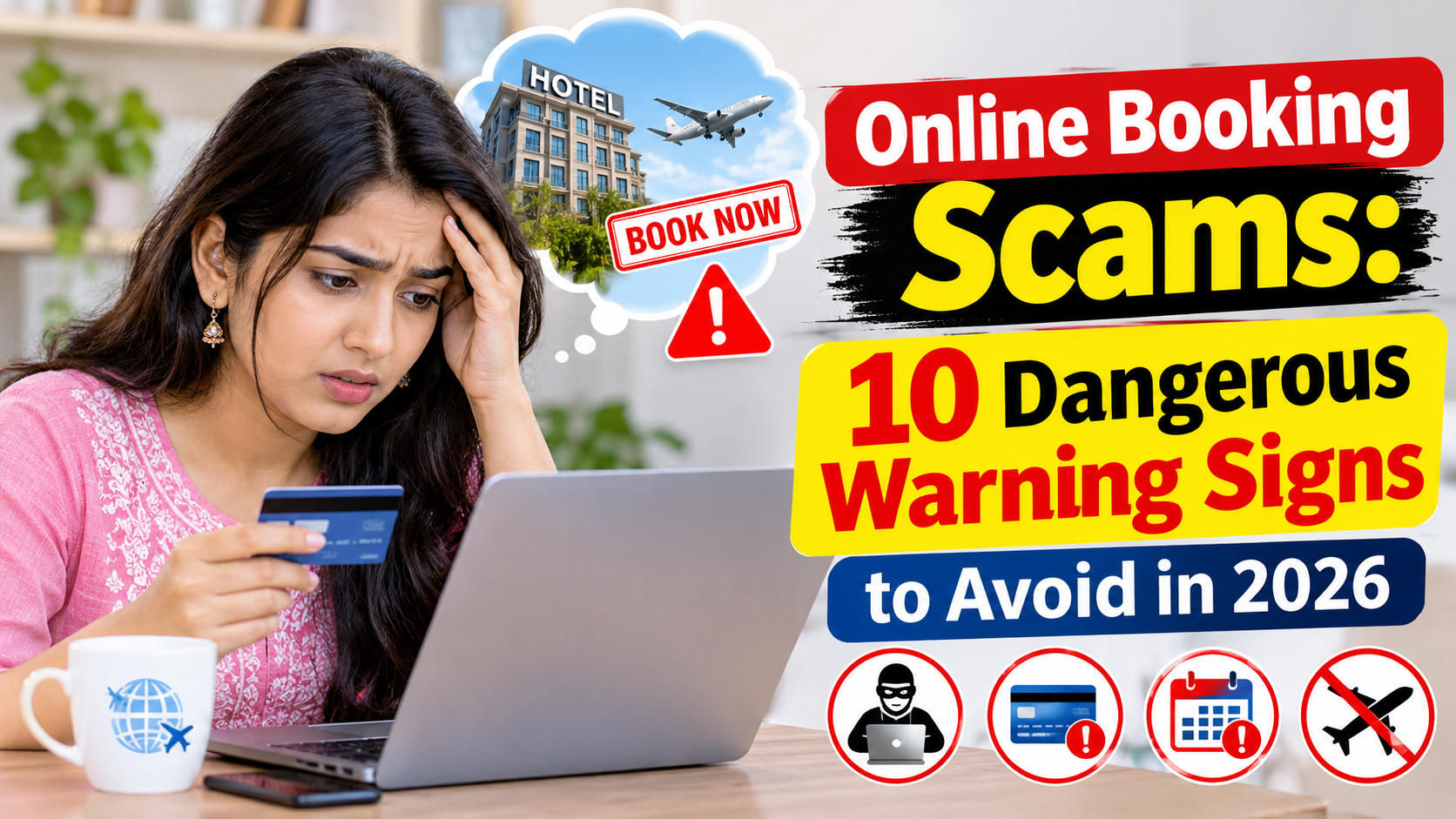
Online Booking Scams: 10 Dangerous Warning Signs to Avoid in 2026
misleading offers, payment fraud and identity theft. Learn how
to recognize suspicious booking platforms, protect financial
information, verify website credibility and make safer decisions
before sharing personal details or completing an online payment.
Introduction to Online Booking Scams
Online Booking Scams involve deceptive websites,
accounts, advertisements or messages designed to mislead people
during an online reservation process. These scams may involve
fake booking pages, misleading prices, unauthorized payment
requests or websites that imitate legitimate businesses.
As more people use the internet to arrange travel, accommodation,
appointments and other services, it is important to understand
the risks associated with unfamiliar booking platforms.
A professional-looking website does not automatically guarantee
that a business is genuine. Fraudulent platforms can use copied
photographs, convincing descriptions, fake reviews and
misleading contact information.
This guide explains common warning signs and practical ways
to protect your money, identity and personal information.
how to protect your personal and financial information.
1. What Are Online Booking Scams?
Online Booking Scams are deceptive activities that take advantage
of people using websites or digital platforms to arrange a
reservation. The fraud may occur before payment, during the
transaction or after someone believes a booking is confirmed.
A fraudulent operator may pretend to represent a real business,
publish false availability, advertise unrealistic discounts
or request payment through suspicious channels.
Common Types of Online Booking Fraud
- Fake booking websites: Websites designed to imitate genuine platforms.
- False advertisements: Promotions containing misleading information.
- Advance-payment fraud: Requests for money before a service is properly verified.
- Phishing messages: Messages directing users to imitation payment or login pages.
- Fake confirmation notices: Messages claiming a reservation exists when it does not.
- Identity collection: Forms designed to collect unnecessary personal information.
Important Safety Reminder
A confirmation email, attractive advertisement or professional
website design does not independently prove that a booking
is genuine. Verify important details through trusted channels.
2. Online Booking Scams: 10 Dangerous Warning Signs
Recognizing suspicious patterns can help you avoid fraudulent
websites and misleading reservation requests. Review the
following warning signs before sharing information or making
a payment.
Warning Sign 1: Unrealistic Discounts and Offers
An unfamiliar website may advertise unusually low prices or
exclusive discounts to encourage quick decisions. Compare
the advertised price with reliable sources before proceeding.
Warning Sign 2: Missing Business Information
A website that provides no meaningful business details,
clear policies or reliable contact information deserves
additional scrutiny.
Warning Sign 3: Suspicious Website Addresses
Fraudulent websites may use addresses that look similar to
genuine brands. Check the spelling and domain carefully.
A secure connection alone does not prove that a website
is legitimate.
Warning Sign 4: Pressure to Pay Immediately
Be cautious when a website or representative insists that
you must pay immediately to avoid losing an opportunity.
High-pressure tactics can prevent careful verification.
Warning Sign 5: Unusual Payment Methods
Unexpected requests for cryptocurrency, gift cards,
transfers to unrelated personal accounts or other
difficult-to-reverse payment methods should raise concerns.
Warning Sign 6: Fake Reviews and Testimonials
Some fraudulent platforms display copied, exaggerated
or fabricated reviews. Do not treat testimonials published
only on the website itself as independent verification.
Warning Sign 7: Unclear Cancellation Policies
Missing refund conditions, vague cancellation rules or
contradictory terms may indicate poor transparency.
Read the relevant policies before making a commitment.
Warning Sign 8: Requests for Excessive Personal Data
A suspicious booking form may ask for passwords, one-time
verification codes or unnecessary identity documents.
Never disclose account credentials to complete a reservation.
Warning Sign 9: Suspicious Confirmation Messages
Fake confirmation emails or messages may contain unfamiliar
links, incorrect details or unexpected payment instructions.
Verify the reservation independently instead of trusting
the message alone.
Warning Sign 10: No Reliable Way to Resolve Problems
If a platform provides no clear process for complaints,
cancellations or refunds, consider the risk carefully.
Keep records of important communications and transaction
details.
3. How Fake Booking Websites Work
Fake booking websites often imitate the appearance of
legitimate businesses. They may copy logos, photographs,
descriptions and website layouts to make visitors believe
they are using a trusted platform.
Some websites are created to collect payments without
providing the advertised service. Others may attempt
to obtain login credentials or personal information.
Common Website Deception Techniques
- Using a domain name similar to a genuine organization.
- Displaying copied business photographs or branding.
- Publishing unverified reviews and testimonials.
- Showing false availability or misleading prices.
- Using fake security messages to create confidence.
- Redirecting visitors to unrelated payment pages.
Before using an unfamiliar platform, review its website
address, privacy information, terms and contact details.
Avoid relying on website appearance as proof of authenticity.
4. Payment Fraud and Advance-Payment Risks
Financial loss is one of the major risks associated with
Online Booking Scams. A fraudulent operator may request
money before providing reliable confirmation or may send
a payment link that imitates a trusted service.
Some messages claim that an additional fee is required
to confirm, unlock or protect a reservation. Unexpected
payment requests should always be verified independently.
How to Reduce Payment Risks
- Review the payment recipient before transferring money.
- Use trusted payment channels when available.
- Read refund and cancellation conditions carefully.
- Keep receipts and transaction references.
- Never share a PIN, password or one-time code.
- Do not follow payment instructions from suspicious messages.
Payment Safety Reminder
Never make an additional payment simply because an unknown
contact creates urgency. Confirm the request using an
independently obtained official contact method.
For more consumer protection information, visit
FTC Consumer Advice.
5. Personal Information and Identity Risks
Some fraudulent booking platforms are designed to collect
personal information rather than simply obtain a payment.
Information entered into an untrusted form may be misused
or exposed.
Depending on what is collected, the risks may include
identity misuse, unwanted communication, account compromise
and privacy violations.
Information You Should Protect
- Passwords and account recovery information.
- Banking details and payment credentials.
- One-time passwords and verification codes.
- Personal identification documents.
- Private photographs and sensitive messages.
- Home address and real-time location information.
Review your privacy settings and avoid sharing information
that is not reasonably necessary. Our related
Privacy Policy resource
provides an additional reference for understanding
website privacy information.
6. How to Verify a Booking Website Before Using It
Verification helps you identify warning signs before
committing money or personal information. No single
check can guarantee that a platform is genuine, so
review several independent sources.
Practical Website Verification Steps
- Check the spelling and structure of the website address.
- Look for clear business information and policies.
- Compare important details with independent sources.
- Review whether contact information is consistent.
- Search for credible information about reported problems.
- Check whether payment instructions match the stated business.
- Avoid opening unexpected links from messages or advertisements.
You can also use
Google Safe Browsing
to access website safety information.
Remember that a website passing one security check does
not guarantee that its business claims, prices or services
are genuine.
7. Safer Online Payment Practices
Good payment habits can reduce the risk of financial fraud.
Before completing an online transaction, take time to review
the payment page and confirm that you understand the terms.
Essential Payment Protection Habits
- Use a trusted payment provider when possible.
- Check the recipient and amount before confirming.
- Keep transaction receipts and confirmation messages.
- Enable transaction notifications where available.
- Use unique passwords for important accounts.
- Enable two-factor authentication.
- Monitor account activity for unfamiliar transactions.
Avoid entering payment information after following an
unexpected link. Instead, independently navigate to the
official website or application.
For general cybersecurity advice, consult
CISA Secure Our World.
8. What to Do If You Become a Victim of an Online Booking Scam
If you suspect that you have been targeted by a booking scam,
act promptly. The appropriate response depends on whether
you shared personal information, entered payment details
or transferred money.
Immediate Steps to Consider
- Stop communicating with the suspicious account or website.
- Save relevant messages, receipts and screenshots.
- Contact your bank or payment provider if money was transferred.
- Ask about available transaction dispute or account protection options.
- Change passwords if you shared login credentials.
- Enable additional account security.
- Report the suspicious website or account to the relevant platform.
- Consider contacting the appropriate authorities if necessary.
Do not delete useful evidence before preserving it.
Keep transaction references, dates and relevant communications
in a secure place.
Official Awareness Resources
9. Online Booking Scams: Essential Safety Checklist
Use this checklist before completing an unfamiliar online
reservation or payment.
10 Important Booking Safety Checks
- Have I checked the website address carefully?
- Is the business information clear and consistent?
- Have I reviewed the cancellation and refund policies?
- Are the advertised prices realistic?
- Have I checked independent information about the platform?
- Am I avoiding suspicious payment links?
- Have I verified the payment recipient?
- Am I protecting passwords and verification codes?
- Have I saved important transaction records?
- Do I know how to report suspicious activity?
10. Reliable Resources for Online Booking Safety
Trusted cybersecurity and consumer protection organizations
publish practical guidance about phishing, payment fraud,
privacy and suspicious websites.
Recommended External Resources
Bangladesh e-GOV CIRT
for cybersecurity awareness.
Bangladesh Police
for official police information.
FTC Consumer Advice
for consumer fraud prevention.
CISA Secure Our World
for online security practices.
National Cybersecurity Alliance
for digital safety education.
Google Safe Browsing
for website safety information.
Frequently Asked Questions About Online Booking Scams
What are Online Booking Scams?
Online Booking Scams involve deceptive websites, accounts
or messages that mislead people during a reservation process.
They may involve fake confirmations, payment fraud or
unauthorized collection of personal information.
How can I recognize a fake booking website?
Look for suspicious domain names, unrealistic offers,
missing business details, unclear policies, unusual
payment requests and misleading confirmation messages.
Is a website with HTTPS always safe?
No. HTTPS helps protect the connection between your browser
and a website, but it does not prove that the website
operator is genuine or trustworthy.
Should I pay through an unfamiliar booking link?
Avoid making payments through unexpected or suspicious links.
Independently verify the platform and payment instructions
before sharing financial information.
What should I do after sending money to a scammer?
Contact your bank or payment provider as soon as possible.
Preserve transaction records and messages, secure affected
accounts and consider reporting the incident to the
appropriate authorities.
Can fake booking websites steal personal information?
Yes. Some fraudulent websites collect personal details,
payment information or login credentials. Avoid entering
sensitive information into untrusted forms.
Are online reviews enough to verify a booking platform?
No. Reviews can be incomplete, misleading or fabricated.
Compare information from multiple independent sources
and verify important business details.
Where can I learn more about online booking safety?
Consult recognized cybersecurity and consumer protection
organizations. You can also review our
Privacy Policy
and
Frequently Asked Questions
for related website information.
Does this guide verify individual booking websites?
No. This is a general educational guide. It does not
authenticate individual businesses, guarantee payment
safety or replace professional cybersecurity advice.
Conclusion: Stay Alert and Avoid Online Booking Scams
Online Booking Scams can cause financial loss,
identity misuse and privacy problems. Understanding common
warning signs is an important part of safer internet use.
Before making a reservation, review the website address,
check business information, read relevant policies and
verify payment instructions. Never share passwords,
PINs or one-time verification codes with unknown contacts.
A few minutes of careful verification can help you identify
suspicious activity before it becomes a bigger problem.
Stay informed, protect your personal information and use
trusted resources when making online decisions.
Educational content only. This article provides general
information about online booking fraud, privacy and payment
safety. It does not verify individual businesses or replace
professional financial, cybersecurity or legal advice.